


Sustainability is not a privilege reserved for large companies. It begins with everyday choices: how we use resources, treat people and build a business that can keep operating without passing hidden costs on to the future.
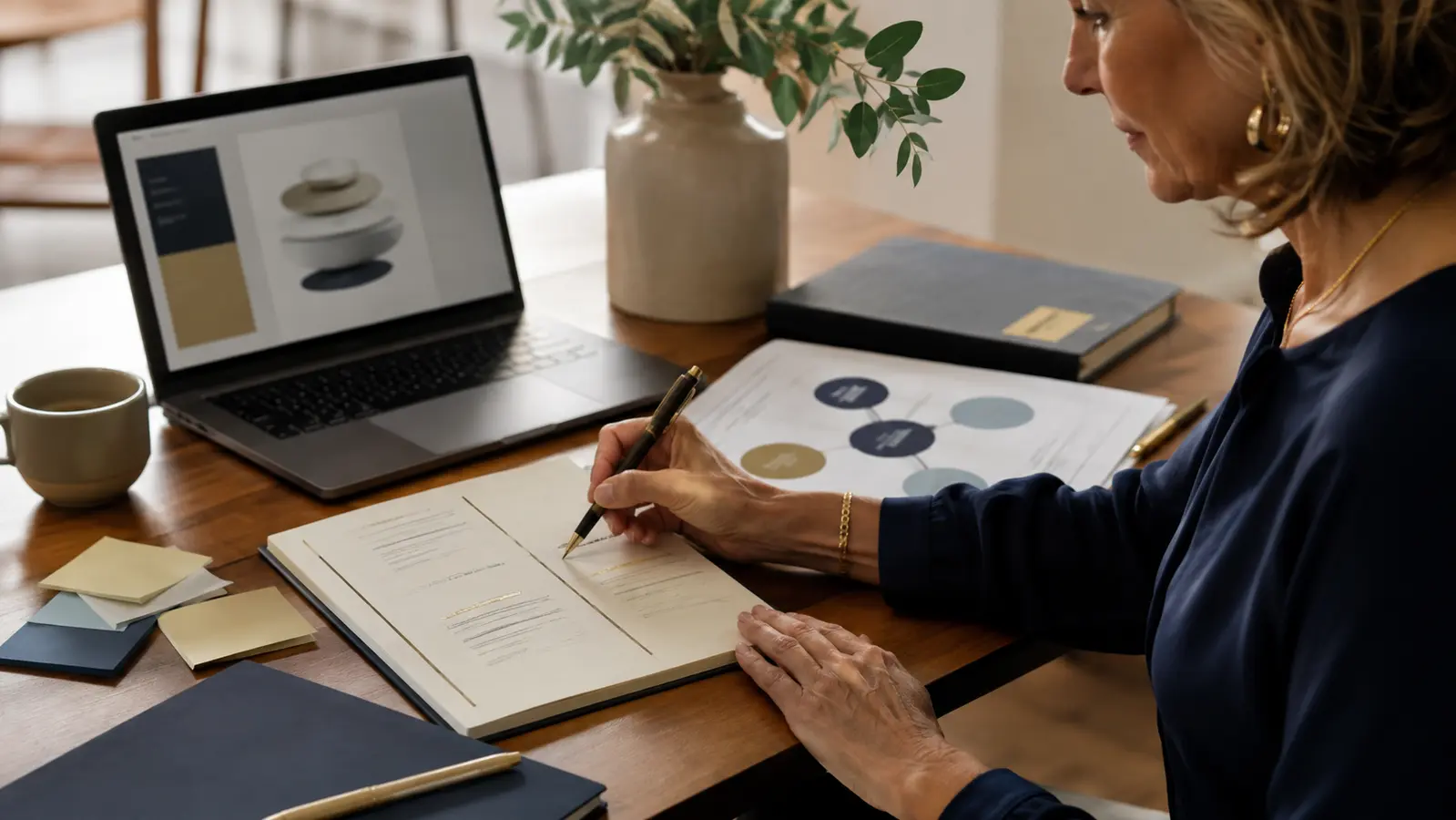
For a long time, sustainability seemed to belong to large companies, governments or environmental organisations. For someone running a small business, working independently or starting a venture after 50, it could feel distant, expensive and complicated.
But sustainability does not begin with a corporate report, solar panels on the roof or an international certificate. It begins with a much simpler question:
What impact do our choices have on people, the environment and the continued existence of our business?
Buying more raw materials than necessary, leaving equipment running without a purpose, using excessive packaging, throwing away products that could be reused, or demanding too much from people without providing decent working conditions are all business decisions.
So are managing stock, reducing waste, choosing responsible suppliers, extending the useful life of equipment and treating employees and customers with respect. These are practical ways to put sustainability into action.
The question, therefore, is not simply whether a company talks about sustainability. The real question is: what does it do when nobody is watching?
Sustainability means more than protecting the environment
One common mistake is to reduce sustainability to recycling or the use of environmentally friendly products. Those actions matter, but the idea is much broader.
The United Nations describes sustainable development in terms of meeting present needs without compromising future generations’ ability to meet their own. This perspective connects economic development with environmental concerns rather than treating them as enemies. Source: United Nations.
In everyday business life, three dimensions help make the idea concrete:
- Environmental: responsible use of water, energy, raw materials and packaging, alongside reduced waste and pollution.
- Social: respect for people, decent working conditions, diversity, inclusion, fair pay and responsible relationships with the community.
- Economic: keeping a business healthy, organised and financially viable over time.
These dimensions are connected. A company that protects the environment but exploits its workers cannot credibly call itself sustainable. A business that treats people well but wastes resources until it becomes financially unviable cannot sustain its contribution either.
Sustainability means seeking balance and consistency between profit, people and the planet. It asks us to examine how those parts affect one another.
Can a small business really make a difference?
Yes, and it does not have to start with a large investment. Small businesses may have fewer financial resources, but often have simpler structures, closer relationships with customers and greater flexibility to change processes.
A small bakery can plan production more carefully to reduce food waste. A clothing shop can use less packaging, sell durable garments and introduce a second-hand section. Someone working from home can cut unnecessary printing, monitor energy consumption and choose suitable digital tools.
A restaurant can review portion sizes, dispose of used cooking oil correctly and make fuller use of suitable ingredients. A consultancy can replace disposable promotional materials with digital content that people actually find useful.
None of these actions will save the planet on its own. Nevertheless, they can reduce impacts, improve processes and build a culture of responsibility.
The OECD connects resource efficiency and the circular economy with climate goals and responsible consumption and production. Preventing waste and using resources efficiently can also support savings, economic activity and local jobs. Source: OECD.
Change becomes more significant when thousands of apparently small decisions begin to move in a shared direction.
Sustainability can also reduce costs

There is a persistent belief that every sustainable product or process must be more expensive. Some changes do require an initial investment. More energy-efficient equipment, changes to production or particular packaging options can carry a cost.
However, sustainability also means eliminating activities that consume money without producing value. Think of products expiring in stock, lights and equipment left on unnecessarily, printing nobody uses, or packaging much larger than the product requires.
Other examples include journeys that could be coordinated, materials bought because stock records are unreliable and products discarded because there is no repair or reuse system.
All of these can damage the environment while reducing a business’s financial margin. Before investing in major solutions, a company can investigate where it loses resources. Sustainability then becomes a practical management tool.
From a linear economy to a circular economy
For decades, the dominant model followed a simple sequence: extract, produce, use and discard. This is the linear model. Products and materials reach the end of their useful life quickly, even when they could still be repaired, reused, transformed or shared.
A circular economy proposes a different approach. Products and materials should remain in use for as long as possible, while resource consumption and waste generation are reduced. Source: European Commission.
That can involve maintenance, repair, reuse, resale, sharing, rental, refurbishment and the recovery of materials. Recycling has a role when earlier options are no longer suitable.
For a small business, this opens interesting possibilities. A company can offer maintenance alongside replacement. A shop can collect used products. A craftsperson can turn offcuts into new pieces. An experienced professional can teach care and repair techniques that were being forgotten.
There is an opportunity here for the generation over 50. Many people grew up learning to preserve objects, use food carefully, carry out small repairs and avoid waste. For a time, these skills were dismissed as old-fashioned habits. Today, many are returning with new names and new technologies.
Experience is not an obstacle to sustainability. It can be a valuable part of the solution.
When sustainability becomes advertising
As customers began to value responsible companies, some brands started using sustainability more as a selling point than a commitment. This practice is known as greenwashing.
It occurs when a company exaggerates, distorts or cannot substantiate its environmental claims. Packaging might carry green leaves and words such as “natural”, “environmentally friendly” or “conscious” without explaining what has actually improved.
The problem goes beyond colours or vocabulary. It is about leading customers towards a conclusion that is not supported by verifiable information.
The European Commission has identified problems with vague or unsubstantiated environmental claims that can make products appear better for the environment than they really are. Its work on consumer protection addresses misleading environmental claims. Source: European Commission impact-assessment summary, 2022.
A committed business needs to communicate honestly. Rather than saying “we are a completely sustainable company”, it can describe a specific, evidenced improvement.
For example, it might say “we reduced packaging use by 20%”, “we now use recycled material in this range”, “we collect used products for reuse” or “we have not eliminated all plastic, but we are testing this alternative”. These are examples of how to communicate, not results claimed by this blog.
Acknowledging limits can strengthen credibility. It shows that a business understands the difference between an ambition and an achievement.
Five steps to begin without changing everything at once
1. Observe before making promises
Study the business for a week or a month. Where is waste occurring? What is bought in excess? Which equipment uses the most energy? What gets thrown away? Are repeated tasks being handled inefficiently?
2. Choose one concrete problem
Do not try to solve everything simultaneously. Your first objective might be less packaging, better stock control or lower paper consumption. A small, clear target is more useful than a grand promise without implementation.
3. Establish a simple measure
Without a way to monitor change, you will struggle to know whether it worked. A complicated report is unnecessary. You might track monthly electricity consumption, packaging quantities, discarded products or the savings generated by a change.
4. Involve people
Employees, suppliers and customers understand different parts of a business. They often notice waste and opportunities that management misses. Sustainability works better when people understand the purpose and participate in solutions.
5. Communicate what you can demonstrate
Explain what you did, the results achieved and what still needs improvement. Turn sustainability into a truthful account of progress rather than a decorative label.
A short exercise for your business
Take a sheet of paper or open a document. What do you buy in excess? What do you throw away too soon? Where do you consume resources without noticing? What small, measurable change could you start this month?
The aim is to turn observation into decisions. Your first conclusion may feel uncomfortable. Perhaps a particular package is unnecessary, or a supposedly cheap process creates considerable waste.
That does not mean the business has failed. It means you now have information that can help you choose more carefully.
Sustainability is a direction, not perfection
No company becomes sustainable overnight. Even organisations with considerable resources face contradictions, technical limits and difficult choices.
Demanding perfection can discourage action. When the standard seems impossible, small business owners may decide that sustainability is a subject for somebody else.
Yet sustainability is an ongoing direction shaped by repeated decisions. A small business does not have to save the planet alone. It does need to take responsibility for the space it occupies, the resources it uses, the people it affects and the promises it makes.
That is the difference between using an attractive word and building a real commitment.
Sustainability means taking responsibility for the choices we make.
Frequently asked questions
Is sustainability only an environmental issue?
No. It also concerns economic viability, working conditions, inclusion, ethics, supplier relationships and the impact on the community.
Does a small business need a sustainability report?
Often it does not, but specific obligations depend on its circumstances. It should still understand its main impacts, identify feasible improvements and keep evidence supporting the claims it communicates.
Is becoming more sustainable expensive?
Some changes require investment. Others reduce costs, particularly by cutting waste, energy consumption and unnecessary purchases.
What is greenwashing?
It is the use of exaggerated, vague or unsubstantiated environmental messages to make a company or product appear more sustainable than the evidence supports.
What should the first step be?
Observe how the business operates, identify one concrete source of waste and choose a small target that can be monitored.
Sustainability with Soul series
Continue reading: Greenwashing: when sustainability becomes marketing make-up (Portuguese) and Circular economy for small businesses: less waste, more value (Portuguese).
Negócios com Alma · NEXA360®
View all articles →